
What Changes in Your Nutrition After 50?
Calcium rises to 1,200 mg a day after menopause, and B12 from food is harder to absorb. What else changes after 50, with a calcium day in Indian portions.
If you have turned 50, or you plan meals for a parent who has, you want to know which parts of the plate need to change and which can stay as they are.
Most of it can stay. Daily needs for most vitamins and minerals hold at the adult level. Three things move: calcium goes up, especially for women after menopause; vitamin D goes up; and B12 in food becomes harder to absorb. All of this happens while appetite and energy needs come down.
Fewer calories, the same nutrients
Past 60, a less active adult needs noticeably less energy in a day:
| Less active adult | Up to 60 | Over 60 |
|---|---|---|
| Man, 65 kg | 2,110 kcal | 1,700 kcal |
| Woman, 55 kg | 1,660 kcal | 1,500 kcal |
The vitamins and minerals do not shrink with the calories. The same amounts have to fit into smaller meals, so the katori of dal, the curd, and the handful of nuts matter more than extra rice or sweets.
Protein follows the same rule. The daily reference stays at 0.83 g per kg of body weight, about 50 g at 60 kg, and keeping muscle matters more with age. With a smaller appetite, put a protein source in each meal rather than relying on one large portion. How much protein do you need a day? shows a vegetarian day that adds up.
Calcium: 1,000 mg, or 1,200 mg after menopause
The general daily reference for adults is 1,000 mg of calcium. For women past menopause it rises to 1,200 mg, because the body absorbs and keeps less calcium once periods stop. For older adults in general, calcium and vitamin D are the two references that go up. Bone loss speeds up in middle age; it is more common in women, but men have it too.
The upper limit for adults from all sources is 2,500 mg a day. Meals alone rarely get there, so it matters mainly when tablets are added to a dairy-rich diet.
A calcium day in Indian portions
The day below uses ordinary vegetarian foods. Pulse amounts are dry weight, measured before cooking.
| Meal | Food and portion | Calcium |
|---|---|---|
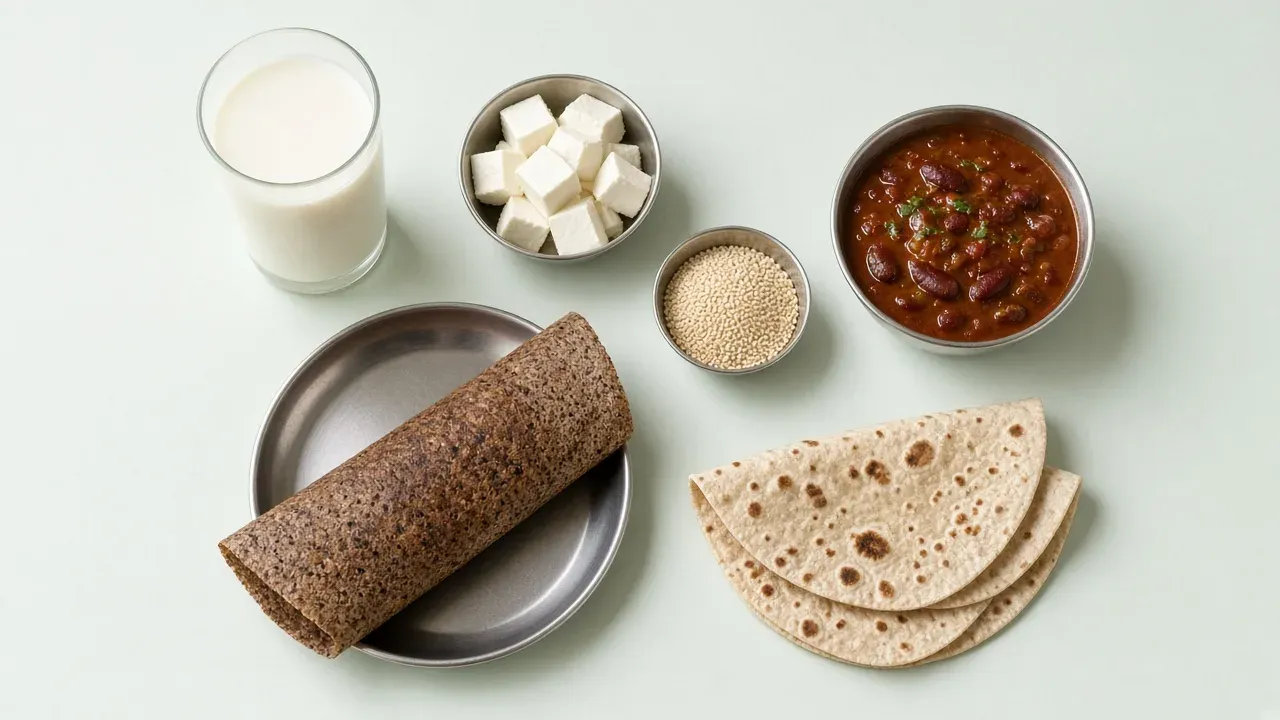
| Breakfast | 250 ml cow’s milk | 295 mg |
| Breakfast | 30 g ragi flour, as a dosa or roti | 109 mg |
| Lunch | 50 g paneer | 238 mg |
| Lunch | 2 rotis from 60 g atta | 19 mg |
| Snack | 10 g white til (about a tablespoon), in chutney or a laddoo | 128 mg |
| Dinner | 30 g dry rajma (one katori, cooked) | 38 mg |
| Dinner | 2 rotis from 60 g atta | 19 mg |
| Bedtime | 150 ml cow’s milk | 177 mg |
| Day total | 1,023 mg |
That covers the 1,000 mg reference. For a woman past menopause, another 150 ml of milk, in tea or as a glass, brings the day to 1,200 mg. Spread like this, no meal carries much more than 400 mg. The body absorbs calcium best in amounts of 500 mg or less at a time.
Take out the paneer and the bedtime milk and the same day drops to about 610 mg. Dairy carries most of the calcium in a vegetarian kitchen. Curd belongs on the same list, so it can stand in for some of the milk.
B12 and vitamin D get harder to come by
B12
The daily reference stays at 2.2 µg, but many people over 50 absorb less of it from food. They make less stomach acid, and the body needs that acid to release the B12 bound up in food. B12 added to fortified foods or supplements skips that step, so it is easier to absorb.
A vegetarian over 50 who relies on milk and curd for B12 should ask for a B12 test at the next check-up. Some long-term medicines for acidity or blood sugar also lower B12 absorption, so mention them.
Vitamin D
The adult reference is 600 IU a day, and it rises for older adults. With age, the skin makes less vitamin D from the same sunlight, and sunlight through a closed window does not count. Few foods contain much of it. A daily walk outdoors in daylight is the everyday route. A blood test shows whether more is needed.
When food does not reach the number
Supplements are not medicines. They add nutrients to a diet; they do not treat disease. If a doctor confirms that calcium is falling short, perhaps because dairy does not suit, a tablet can cover part of the gap.
Herbalife Calcium Tablets combine calcium with magnesium and vitamin D. One tablet a day provides 40% of the recommended daily allowance for calcium, according to the label, so meals still supply most of it. The tablet lists calcium carbonate first, and that form is absorbed best with food, so take it with a meal. The pack holds 60 tablets. It contains milk.
Calcium can get in the way of iron absorption. Anyone taking both tablets should take them at different times of day.
The Heart & Bone Health page sets the calcium and other bone-focused tablets side by side. For the broader question of a daily multivitamin, see Do you need a multivitamin every day?
See them up close
Two questions
Does iron need change after menopause?
Yes. It falls once monthly losses stop, so a woman past menopause usually needs much less iron than she did at 40. Take an iron tablet only if a test shows a shortfall.
What if an older parent eats very little?
Smaller, more frequent meals help: milk or curd mid-morning, a soft khichdi with moong dal, a ragi porridge in the evening. If appetite or weight keeps dropping, talk to their doctor rather than adding tablets.
Start with tomorrow’s breakfast
A glass of milk and a ragi dosa or roti cover about 400 mg before the day begins. Build the rest from the table. To compare calcium formats, look at the Heart & Bone Health page, or share Interest to talk it through for yourself or a parent.
Individual needs vary, especially later in life. For personal advice, consult a qualified healthcare professional or registered dietitian.