
Do You Need a Multivitamin Every Day?
Most healthy adults can meet daily vitamin and mineral needs from food. The amounts to check, where a vegetarian plate falls short, and when a tablet fits.
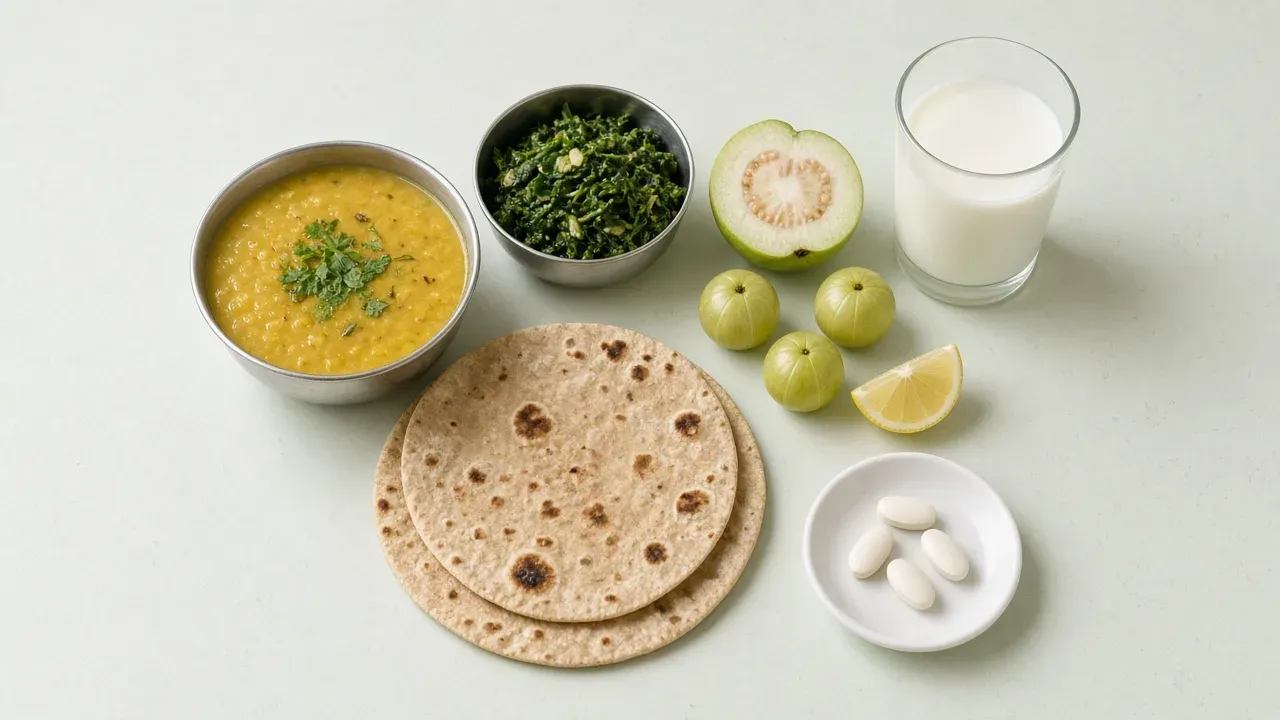
If you eat dal, sabzi, roti, and some dairy most days, and someone has told you to start a daily multivitamin, you want a straight answer before another tablet joins the morning routine.
Most healthy adults do not need one. A varied plate covers the daily amounts for most vitamins and minerals. A multivitamin earns its place when you can name a gap that food is not filling, and a doctor or dietitian agrees.
The daily amounts your plate has to cover
These are general daily references for healthy Indian adults. They are set high enough to cover nearly everyone, so most people need a little less than the figure shown.
| Nutrient | Men | Women |
|---|---|---|
| Calcium | 1,000 mg | 1,000 mg |
| Iron | 19 mg | 29 mg |
| Folate | 300 µg | 220 µg |
| Vitamin B12 | 2.2 µg | 2.2 µg |
| Vitamin C | 80 mg | 65 mg |
| Vitamin D | 600 IU | 600 IU |
There is a ceiling as well. For adults, the safe upper limit from all sources combined is 2,500 mg of calcium, 45 mg of iron, and 4,000 IU of vitamin D a day. Ordinary meals rarely come near those numbers. Two or three tablets stacked on top of fortified foods can.
Where a vegetarian plate usually falls short
Most of the table is easy to reach with Indian food. Guava, amla, lemon, and tomatoes bring vitamin C, and dal, chana, and leafy greens bring folate. Four lines take more planning.
Vitamin B12
Plant foods contain none unless they are fortified. Milk, curd, paneer, and eggs supply it, so a diet with little dairy and no eggs is the clearest case for a B12 source beyond ordinary meals.
Vitamin D
Very few foods contain much of it. The skin makes it in sunlight, though not through a closed window, and someone indoors from morning to evening can fall short without noticing.
Iron
Iron from dal, chana, and greens is absorbed less well than iron from meat. A squeeze of lemon over the dal, or guava or amla with the meal, helps the body take up more. The women’s figure of 29 mg is the harder one to meet.
Calcium
Dairy carries most of the calcium in a vegetarian day. A 250 ml glass of milk gives about 295 mg, and 50 g of paneer about 240 mg. Ragi and white til are among the strongest plant sources. What changes in your nutrition after 50 lays out a full calcium day in household portions.
A three-question check before you start
- Can you name the gap? “I barely eat dairy” or “I am indoors from nine to seven” is a gap. “I feel low” is not, because tiredness has too many possible causes to settle with a tablet.
- Has a professional looked at it? A doctor can test B12, vitamin D, and iron. Ask before starting anything if you are pregnant, planning a pregnancy, breastfeeding, managing a medical condition, or taking regular medicine.
- Does the label match the gap? Compare the label with the table above, add what you already get from fortified foods and any other tablet, and stay under the upper limits.
If a daily tablet fits
Supplements are not medicines. They add nutrients to a diet; they do not treat disease. If the check points to a tablet, decide first whether the gap is broad or single.
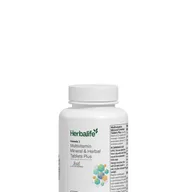
- Formula 2 Multivitamin Mineral & Herbal Tablets Plus is the broad option: one daily tablet that combines essential vitamins and minerals with herbal extracts, made to help fill gaps across the diet. The pack holds 90 tablets, and the label says it contains soy and wheat.
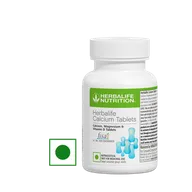
- Herbalife Calcium Tablets is the single-gap option: calcium with magnesium and vitamin D. One tablet a day provides 40% of the recommended daily allowance for calcium, according to the label, so meals still supply the rest. The pack holds 60 tablets. It contains milk.
Both tablets list calcium carbonate as their first ingredient, and that form is absorbed best with food. Take them with breakfast or lunch, not on an empty stomach.
The Vitamins & Supplements page sets the daily tablets side by side.
See them up close
Three questions
Do vegetarians need a B12 supplement?
Not automatically. Milk, curd, paneer, and eggs supply B12, so a vegetarian who has dairy every day may already cover it. Someone who eats little dairy, or is vegan, should ask for a B12 test and talk about fortified foods or a supplement.
Should I start a multivitamin after 50?
Age alone is not a reason. Calcium and vitamin D needs rise later in life, and B12 in food becomes harder to absorb. What changes in your nutrition after 50 goes through all three.
Can a multivitamin stand in for vegetables?
No. Vegetables, fruit, and pulses also bring fibre and plant compounds that a tablet does not contain. A tablet covers a named gap on top of meals.
Check the plate first
Hold this week’s meals against the table: dairy once or twice a day, a pulse at lunch and dinner, a vitamin C fruit with the iron-rich meal, and some time outdoors in daylight. If one line still stays empty, compare formats on the Vitamins & Supplements page, or share Interest to talk it through.
Individual needs vary. For personal advice, consult a qualified healthcare professional or registered dietitian.